

The Skin Follows the Muscle: Why Structural Support is the Key to Anti-Aging and Facial Restoration
The Architecture of Natural Beauty: Where Structural Anatomy Meets Holistic Aesthetics


If you’ve followed my journey, you know Soul Trine is built on the foundation of holistic wellness. But the truth is, my dedication to age-defying practices—especially those focused on the face—came from a deeply personal experience: rapid, medically necessary weight loss.
The Unexpected Side Effect of Transformation
A while back, my cardiologist recommended a major health change that led to substantial weight loss. While my body was healthier, the rapid depletion of volume left my facial contours looking depleted. I noticed new expression lines that hadn’t been there before.
Whether weight loss is achieved through medical necessity, weight loss surgery, or the increasingly common use of GLP-1 medications, the result for the face is often the same: a sudden loss of the “scaffold” that keeps our skin tight and lifted.
What made my journey particularly complex was the timing of my physical recovery. Just 14 days before my weight loss surgery, I underwent a tonsillectomy. My body was forced to navigate the internal trauma and removal of lymph nodes in my throat while simultaneously entering a state of rapid weight loss. This “double hit” created a perfect storm for stagnant lymph that became much more visible as my facial volume decreased. I refused to accept that the trade-off for better health was a “tired” appearance. This challenge became my greatest teacher, leading me back to a fundamental truth I now share with all my clients: The skin follows the muscles.
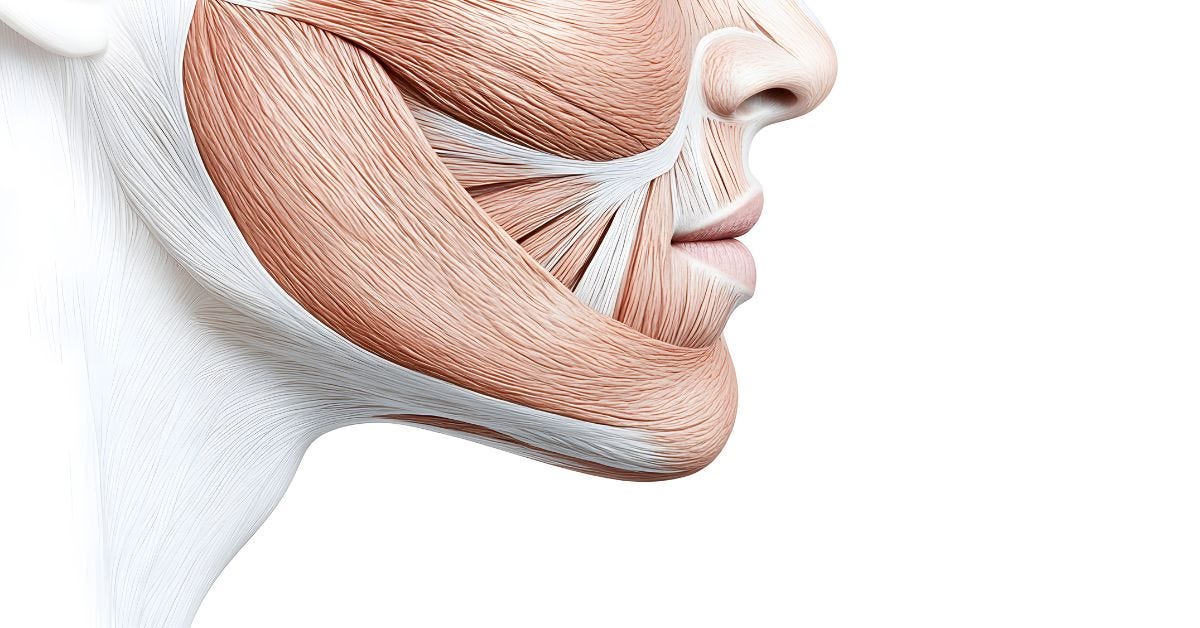
The Science: Why the Skin Follows the Muscle
In the rest of the body, muscles are attached to bones. But the face is unique. Anatomical studies show that facial muscles (the muscles of facial expression) are attached directly to the underside of the skin or to other muscles through a connective tissue layer called the SMAS (Superficial Musculoaponeurotic System).
The Data: * Anatomical Tethering: Unlike skeletal muscles that move joints, facial muscles insert into the dermis. This means every movement and every change in muscle volume directly affects the skin’s surface. Detailed anatomical research on the SMAS confirms this unique architecture where the skin and muscle function as a single unit.
The Catabolic State: When rapid weight loss occurs—particularly with GLP-1s or surgery—research in The Journal of Clinical Investigation highlights that the body often enters a catabolic state, breaking down muscle tissue for energy.
Volume Loss & Ptosis: Scientific literature on facial aging confirms that “facial fat pads” and “muscle atrophy” are the primary drivers of sagging (ptosis). Studies published via PubMed consistently show that structural support is key to a youthful appearance.
The Surgical “Dam”: Internal Trauma and Fluid Stagnation
Many people think that if there isn’t a visible scar on the skin, the lymphatic system hasn’t been affected. However, internal surgeries—like a tonsillectomy or dental procedures—create internal adhesions and fibrotic tissue that are invisible to the eye but act as a physical dam for lymph fluid.
The removal of nodes (lymphadenectomy) or the trauma of the procedure forces the body to find secondary, often less efficient, routes for drainage. Research on post-surgical lymphedema and drainage disruption shows that when these “filters” are removed or damaged, fluid can pool in the surrounding tissues. For the face, this manifests as chronic puffiness that stretches the skin and adds weight to the lower third of the face.
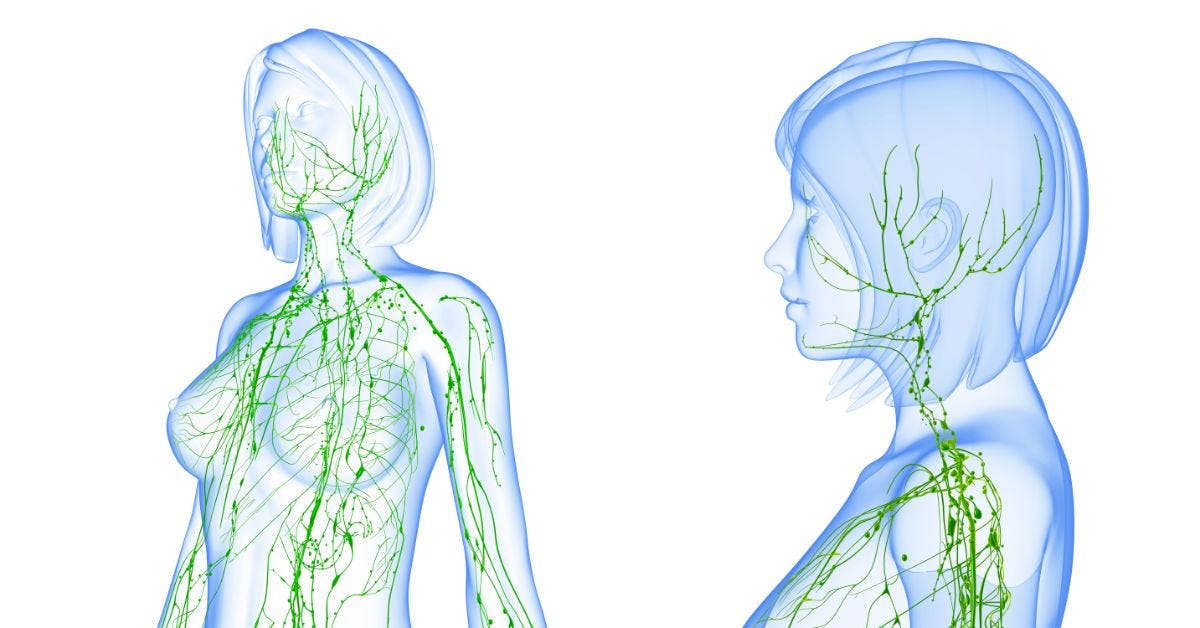
Why Every Surgery Needs Lymphatic Support
Lymphatic drainage is often associated only with cosmetic procedures like facelifts, but it is a vital recovery tool for all surgeries—including medical, dental, and orthopedic procedures.
Clearing the “Debris”: Surgery creates an immediate inflammatory response. Lymphatic work helps the body clear out cellular debris, anesthesia remnants, and inflammatory byproducts.
Reducing Fibrosis: Early intervention with lymphatic and deep tissue work prevents the formation of thick, restrictive internal scar tissue (fibrosis) that can permanently alter how fluid moves through your face and neck.
Systemic Healing: Research on manual therapy and post-surgical recovery highlights that stimulating the lymphatic system reduces recovery time and supports the body’s innate ability to heal itself.
Body-Focused Recovery & Weight Loss Support: While I focus on the Upper Kinetic Chain (the head, neck, and chest) for age-defying goals, I highly recommend booking with Kyrsten for all other body-focused lymphatic needs. She specializes in helping the body recover from orthopedic and medical surgeries, and supports those on weight loss journeys (including GLP-1 protocols) by removing excess weight caused by stagnant, inflammatory fluid.
The Kinetic Chain: Stretching & Fascia
Facial muscles are part of a continuous kinetic chain. If your chest or neck is tight—often a result of post-surgical guarding or modern posture—it creates a downward “tug” on your face. Stretching is vital for fascial release, allowing muscles to rebound to their natural, lifted position. Studies in The Journal of Bodywork and Movement Therapies highlight how myofascial release improves tissue health and circulation.

The Power of Synergy: Why Combined Modalities Work
There is a common misconception that lymphatic drainage and deep tissue work should not be performed in the same session. However, synergy is essential for restoration.
Deep Tissue + Lymphatic: Deep tissue work releases the structural “logjams” (tight muscles and fascia) that physically block lymph passages.
Acupressure + Lymphatic: Combining these creates a powerful healing response. Research on the combination of acupressure and lymphatic drainage shows that this dual approach significantly improves systemic circulation and tissue repair.
A Natural Alternative to Fillers
Fillers add passive weight, which can exacerbate sagging over time. Clinical discussions on filler weight highlight the risk of secondary ptosis. In contrast, JAMA Dermatology proved that regular facial exercises significantly improve facial fullness naturally.

How to Work With Me: In-Person or Remote
1. In-Person: The Age-Defying Trine Treatment (Indianapolis)
This is a customized, anatomy-focused protocol tailored to your unique structure. We utilize a targeted combination of opening the lymphatic channels of the cervicothoracic region, deep tissue stretching, and specialized Buccal (intra-oral) massage. This 360-degree approach ensures that fluid is drained and your facial “scaffold” is fully released and restored.
2. Remote: Virtual Age-Defying Coaching (Worldwide)
I offer 1-to-1 Remote Coaching sessions where we build a customized protocol of Face Yoga, stretching, and self-massage techniques you can perform at home to achieve structural results.
Deepen Your Practice: Soul Trine Ascend
Our facial fitness content is a new addition to our paid Soul Trine Ascend subscription tier. The paid tier offers exclusive articles, live demonstrations, and at-home techniques.
➡️ Book your In-Person Trine Treatment or Remote Coaching through MassageBook to start your custom restoration experience.
➡️ Subscribe to Soul Trine Ascend on Substack to keep up with ascension(collective readings, ascension and healing insights) and age-defying content. Learn more here.
With love and alignment,
Aether Candace